
🧀 Cacio e Pepe – The Classic Roman Pasta
Cacio e Pepe is a timeless Italian pasta dish that showcases simplicity and elegance. With just a few ingredients—pasta, Pecorino Romano cheese, black pepper, and pasta water—Cacio e Pepe transforms into a creamy, flavorful masterpiece. By enjoying Cacio e Pepe, you experience the heart of Roman cuisine, where technique and quality ingredients create a dish that is both comforting and sophisticated.
🥘 Key Ingredients for Cacio e Pepe
When preparing Cacio e Pepe, the main ingredients include al dente pasta, finely grated Pecorino Romano, freshly ground black pepper, and a little starchy pasta water. Each ingredient plays a crucial role in balancing flavor and texture. Following this method ensures that every bite of Cacio e Pepe is perfectly creamy, cheesy, and peppery.
🍳 How to Cook the Perfect Cacio e Pepe
To make authentic Cacio e Pepe, cook pasta until al dente and reserve some pasta water. In a pan, combine grated Pecorino Romano and freshly cracked black pepper, gradually adding pasta water to create a silky, creamy sauce. Toss the pasta in the sauce until fully coated. By preparing Cacio e Pepe this way, you achieve the perfect harmony of cheese, pepper, and pasta texture that makes this dish a Roman classic.
🍽️ Serving and Enjoying Cacio e Pepe
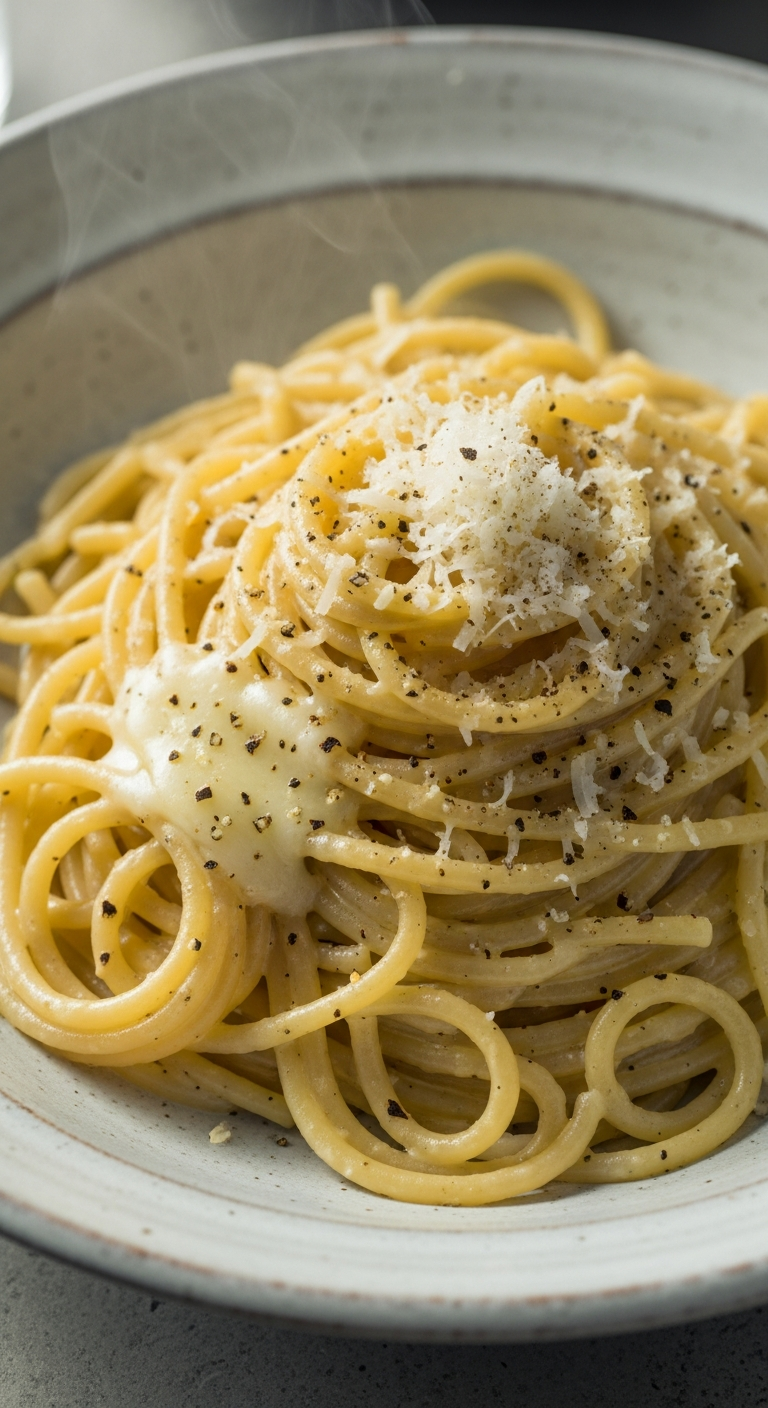
Serve Cacio e Pepe immediately, garnished with extra Pecorino and black pepper. Enjoying Cacio e Pepe is a celebration of simplicity and authenticity, perfect for a quick weeknight meal or an elegant dinner. This dish is proof that a few high-quality ingredients, expertly combined, can create a culinary experience that is truly unforgettable.
Prep and Cook Time
- Planning: 10 minutes
- Cooking: 15 minutes
- Total Time: 25 minutes
Yield
Serves 4 generous portions
Difficulty Level
Easy to Medium - mastering the sauce’s silkiness takes practice but is achievable with patience.
Ingredients
- 400g (14 oz) spaghetti or tonnarelli (a customary Roman pasta)
- 1 ½ cups finely grated Pecorino Romano cheese, packed
- 2 tablespoons coarsely cracked black pepper
- 1 ½ cups reserved starchy pasta water
- Salt for boiling water (use sparingly as the cheese is salty)
Instructions
- Bring a large pot of well-salted water to a boil. Add the pasta and cook until just shy of al dente, about 1-2 minutes less than package instructions.
- While pasta cooks, toast the black peppercorns in a dry skillet over medium heat until fragrant and beginning to crackle, about 2 minutes. Transfer to a mortar and crush coarsely, or use cracked pepper from the mill.
- Reserve 1 ½ cups of pasta cooking water before draining the pasta. This starchy water is key to the silkiness of the sauce.
- in the still-hot skillet, add the cracked pepper and about ½ cup of the reserved pasta water. Heat gently, stirring to bloom the pepper’s aroma and create a fragrant, lightly peppered broth.
- Add the drained pasta directly into the skillet with the pepper broth. toss vigorously to coat every strand.
- Remove the skillet from heat. Gradually sprinkle the grated Pecorino Romano over the pasta while tossing energetically with tongs or forks to combine. stir in reserved pasta water a little at a time, encouraging a creamy sauce to form. The cheese will emulsify into a luscious, silky coating without clumping.
- If the sauce becomes too thick, incorporate small splashes of pasta water until it reaches a smooth, velvety consistency that clings to the pasta perfectly.
- Plate instantly. Garnish with additional cracked black pepper and a light dusting of Pecorino for a visually striking finish.
Tips for Success
- Use freshly cracked black pepper-its essential oils are what give the dish its characteristic spicy warmth.
- Grate the Pecorino Romano finely and pack it firmly to ensure a creamy melt.
- Do not over-salt the pasta water as the cheese adds notable saltiness.
- Emulsification is the secret: vigorously tossing and slowly adding hot pasta water creates the signature creamy sauce without cream.
- If the sauce splits or clumps, add a splash more warm pasta water and keep mixing off-heat.
- For a twist, try tonnarelli pasta-the classic roman choice-or spaghetti for a more widely accessible option.
Serving Suggestions
Serve your Cacio e Pepe on warm plates to keep the sauce glossy and fluid. Pair it with a crisp, chilled white wine like Verdicchio or Frascati to balance the cheese’s saltiness and the pepper’s bite.Garnish modestly with cracked black pepper and a sprinkle of extra Pecorino to add texture and depth. A fresh green salad dressed simply with lemon and olive oil brings brightness to the table and complements this soulful Roman dish.
| Nutrient | Amount per serving |
|---|---|
| Calories | 520 kcal |
| Protein | 22g |
| Carbohydrates | 74g |
| Fat | 14g |

For more classic Italian pasta inspirations, explore our detailed guide on Classic Italian Pasta Recipes. To delve deeper into the cultural heritage of Roman cuisine, the Encyclopedia Britannica’s overview of Italian cuisine is an excellent resource.
Q&A
Q&A: Cacio e Pepe – The Timeless Charm of Roman simplicity
Q: What exactly is Cacio e Pepe?
A: At its heart, Cacio e Pepe is a humble yet unforgettable roman pasta dish, whose name literally means “cheese and pepper.” It’s a minimalist masterpiece made with just a few simple ingredients – Pecorino Romano cheese,freshly ground black pepper,pasta,and pasta water – coming together to create a creamy,peppery symphony on your palate.
Q: Why is Cacio e Pepe considered a symbol of Roman cuisine?
A: Cacio e Pepe embodies the very essence of Roman cooking: simplicity married with bold, memorable flavor. It’s a dish born out of necessity in ancient pastoral communities – portable, economical, and satisfying. Over time, it has transcended its humble origins, becoming a cultural icon personifying the “less is more” culinary philosophy that the Eternal city cherishes.
Q: How do just three ingredients create such a rich sauce?
A: The magic lies in technique and balance. The starchy pasta water emulsifies with Pecorino Romano cheese, transforming into a silky, luscious sauce that expertly coats each strand of pasta. Meanwhile, freshly ground black pepper provides an aromatic kick that cuts through the richness – a perfect harmony achieved through timing and intuition rather than complexity.
Q: Is there a specific type of pasta traditionally used for Cacio e Pepe?
A: Yes! Tonarelli, a thin spaghetti-like pasta with a square cross-section, is traditionally favored as its texture helps catch the creamy sauce. Tho,spaghetti or even bucatini can stand in nicely - the key is to pick a pasta that holds onto the sauce without overwhelming it.Q: Can Cacio e Pepe be adapted for modern tastes?
A: Absolutely. While purists treasure the original simplicity, creative chefs take inspiration from Cacio e Pepe’s foundation to craft inventive variations – adding ingredients like lemon zest for brightness, a touch of chili for heat, or even enriching the dish with butter or cream. Yet, the soul remains in the cheese and pepper’s timeless dance.
Q: What makes Cacio e Pepe still relevant in today’s complex culinary world?
A: In an era of ever-evolving gastronomy, Cacio e Pepe reminds us that great food doesn’t rely on complexity but on quality ingredients and reverence for tradition. It’s a celebration of restraint, proving that elegance and depth can be found in the simplest pleasures - a comforting melody of roman flavor echoing through time.
Q: Where can one experience the best authentic Cacio e Pepe?
A: While countless trattorias across Rome expertly serve this classic, the true experience is tasting it where history breathes – the cobbled streets and lively piazzas of the city itself. However, with the right technique and quality ingredients, you can bring a little slice of Roman culinary magic into your own kitchen worldwide.
Future Outlook
In a world often dazzled by complexity, Cacio e Pepe stands as a humble testament to the power of simplicity done well. This timeless Roman classic reminds us that true culinary magic doesn’t always require a long list of ingredients or elaborate technique-sometimes, it’s the perfect harmony of just cheese, pepper, and pasta that creates an unforgettable experience. So, the next time you seek comfort on a plate or wish to savor a slice of Roman heritage, let Cacio e Pepe be your flavorful guide back to the elegant art of simplicity.