
- preparation: 30 minutes
- Cooking: 15 minutes
- Total Time: 45 minutes
Yield
Serves 4 sushi enthusiasts (approximately 8 rolls)
Difficulty Level
Medium – Ideal for cooks comfortable with sushi rolling techniques but approachable for adventurous beginners.
Ingredients
- 2 cups sushi rice, rinsed thoroughly and cooked
- 3 tbsp rice vinegar
- 1 tbsp sugar
- 1 tsp salt
- 4 sheets nori (seaweed)
- 6 oz cooked lobster or shrimp tempura (for that signature crunchy bite)
- 1 ripe avocado, sliced thinly
- 1 cucumber, julienned
- 4 oz cream cheese, cut into strips (optional)
- 2 tbsp tobiko (flying fish roe) for topping
- Unagi sauce (sweet eel sauce) for drizzling
- Soy sauce, pickled ginger, and wasabi for serving
- Bamboo sushi rolling mat wrapped in plastic wrap
Instructions
- Prepare the sushi rice: Mix rice vinegar, sugar, and salt in a small saucepan over low heat until dissolved.Gently fold this seasoning into the hot cooked sushi rice. Spread rice on a large tray to cool quickly and avoid clumping.
- Prepare the filling: If using shrimp tempura, ensure it’s crispy and warm. Slice the avocado and cucumber into consistent, thin strips. Cut cream cheese to match the length of the other fillings. Keep all ingredients ready at hand.
- Assemble the roll: Place 1 sheet of nori shiny side down on your bamboo mat. Wet your fingers and spread about 1 cup of sushi rice evenly over the nori, leaving a 1-inch border at the top edge.
- Inverted roll technique: Carefully flip the nori so the rice faces down on the plastic wrap-covered bamboo mat. Place avocado slices neatly on the exposed nori along one edge.
- Add filling inside: Layer lobster or shrimp tempura, cucumber, and cream cheese on top of the nori opposite the avocado slices.
- Roll it tightly: Using the bamboo mat, roll the sushi firmly but gently, starting from the edge with the fillings, encasing the ingredients with the avocado-sheathed rice on the outside.
- Slice with precision: Clean your sharp knife with a damp cloth between cuts and slice the roll into 8 equal pieces. Ensure smooth, clean cuts to preserve the roll’s structure.
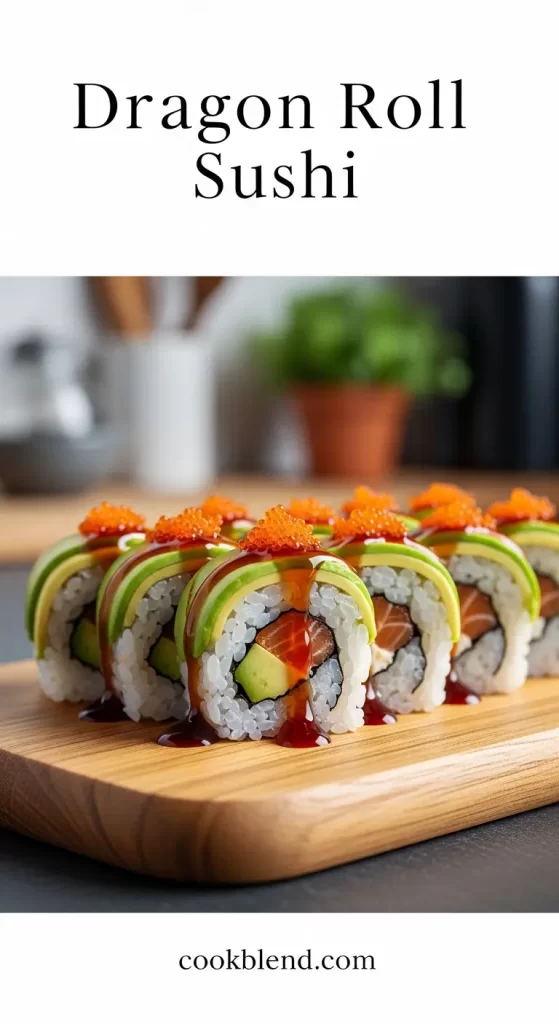
- Garnish and plate: Arrange slices on a plate, drizzle generously with unagi sauce, and sprinkle tobiko on top for a burst of color and flavor.
Chef’s Notes
- Rice consistency is key: Avoid overcooking sushi rice; it should be sticky but not mushy. Use short-grain rice for the perfect texture.
- Ingredient freshness: Always choose the freshest seafood and ripe avocado for vibrant flavors and safe consumption.
- Substitutions: Crab or imitation crab (kani kama) works well as an alternative seafood filling.
- make-ahead tip: Prepare sushi rice in advance but assemble rolls just before serving to maintain ideal texture.
- Rolling advice: Use plastic wrap on your bamboo mat to prevent sticking and keep your hands slightly damp while handling rice.
Serving Suggestions
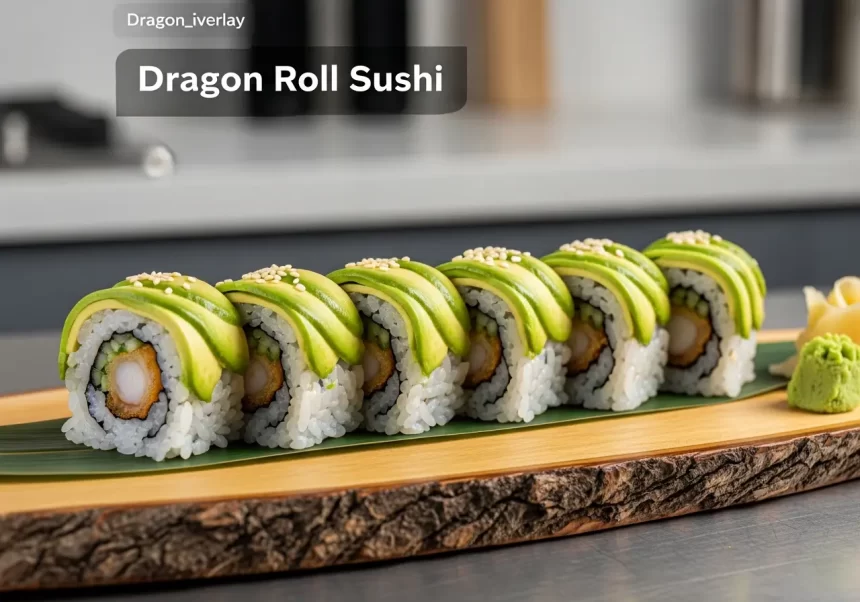
Present your Dragon Roll Sushi on a sleek black or wooden sushi platter to highlight vibrant colors. Add a small mound of pickled ginger and a dab of wasabi on the side. Freshly sliced lemon wedges work beautifully as a garnish to brighten the dish. Pair your rolls with chilled sake or a crisp Japanese green tea to elevate the experience. for a sophisticated touch, lay delicate edible flowers or microgreens atop the tobiko.

Nutrition Data
| Nutrient | Per Serving (2 rolls) |
|---|---|
| Calories | 320 kcal |
| Protein | 18g |
| Carbohydrates | 38g |
| Fat | 8g |
To deepen your sushi-making journey,explore our guide to sushi techniques. For additional culinary inspiration, visit the japan Travel sushi guide, providing interesting context and regional variations of this quintessential dish.
Q&A
Q&A: Dragon Roll Sushi – A Delicious Fusion of Flavor & artistry
Q1: What exactly is a Dragon Roll sushi?
A1: The Dragon Roll is a visually stunning and flavor-packed sushi creation that marries the elegance of traditional Japanese techniques with inventive, contemporary flair. Typically, it features eel (unagi) and cucumber wrapped inside, topped with thin slices of avocado arranged to resemble dragon scales, often drizzled with sweet eel sauce for a smoky-sweet finish. Its name alludes to its serpentine appearance, evoking the mythical dragon’s grace and power.
Q2: How did the Dragon Roll get its name?
A2: The name “Dragon Roll” comes from its appearance-when the avocado slices are layered delicately over the roll and garnished with sauces, the assembly visually mimics the scaled back of a dragon, winding majestically across the plate. It’s a feast not only for the palate but also for the eyes, blending culinary craft with artistic presentation.
Q3: What makes the Dragon Roll unique compared to other sushi rolls?
A3: unlike simpler rolls, the Dragon Roll is a party of texture and layers. It combines the tender eel’s caramelized smokiness, creamy avocado, and the crispness of cucumber, creating a multi-sensory experience. Moreover, the artistry in its construction elevates it beyond just food-each slice is a bite-sized masterpiece balancing taste, texture, and aesthetics.Q4: Can Dragon Roll sushi be adapted for different dietary preferences?
A4: Absolutely! While traditional Dragon Rolls feature eel, creative sushi chefs have crafted vegetarian or vegan versions using grilled mushrooms, tempura vegetables, or marinated tofu as a savory substitute. The avocado “scales” and signature sauces remain to keep that iconic look and luscious mouthfeel, proving that artistry and flavor can delight every palate.
Q5: What sauces and accompaniments complement the Dragon Roll?
A5: The classic partner is a sweet and savory eel sauce, which enhances the smokiness of unagi and ties the roll together. Some chefs add a hint of spicy mayo or sprinkle tobiko (flying fish roe) for bursts of briny pop. Served alongside pickled ginger and wasabi, the Dragon Roll invites a harmonious dance of flavors-refreshing, spicy, sweet, and umami-rich.
Q6: Why has the Dragon Roll become a beloved staple in sushi menus worldwide?
A6: Its popularity lies in the perfect marriage of tradition and innovation. The Dragon Roll offers sushi lovers a delightful twist on the familiar, packaging rich flavors in an artistically crafted vessel. It embodies sushi’s global appeal: bite-sized elegance that’s as pleasing visually as it is indeed indulgently tasty, making it a timeless favorite from Tokyo to New York.
Q7: How can home cooks attempt making Dragon Rolls themselves?
A7: Patience and precision are key! Start with preparing sushi rice properly, select fresh ingredients (especially ripe avocado and cooked eel or substitutes), and master the rolling technique using a bamboo mat.Layer thin avocado slices artfully and finish with a drizzle of eel sauce. There are plenty of tutorials online that break down each step-turning your kitchen into a stage for sushi artistry.Q8: What cultural importance does the Dragon hold in relation to the roll?
A8: In East Asian cultures, dragons symbolize strength, power, and good fortune. The Dragon Roll nods to these timeless notions by transforming sushi into a symbol of creativity and bold flavor. Eating a dragon roll becomes more than a meal-it’s a mini celebration of cultural artistry and culinary passion united in a single,exquisite bite.
Insights and Conclusions
In the world of sushi, the Dragon Roll stands out not just as a dish, but as a captivating experience-a harmonious blend of vibrant flavors and meticulous craftsmanship. From its artful presentation resembling mythical dragons to the intricate balance of fresh ingredients, this roll embodies the spirit of culinary innovation rooted in tradition. Whether you’re a seasoned sushi lover or a curious newcomer, indulging in a Dragon Roll invites you to savor more than just a meal; it’s a celebration of creativity, culture, and the endless possibilities found within a single bite. So next time you seek a taste adventure, let the Dragon Roll guide you through a delicious fusion where flavor meets artistry in perfect harmony.