
When it comes to classic Italian cuisine, few dishes embody simplicity and flavor as effortlessly as Spaghetti Aglio e Olio. Yet, despite its humble ingredients-garlic, olive oil, chili flakes, and pasta-many find themselves tongue-tied even before the first bite. Is it “ah-LEE-oh,” “ah-LYoh,” or something else entirely? Fear not! In this article, we’ll unravel the mystery behind mastering the pronunciation of this beloved dish, guiding you step-by-step to confidently say “Spaghetti Aglio e Olio” like a true italian aficionado.Prepare to impress both your palate and your pronunciation skills!
Mastering Spaghetti Aglio e Olio starts not just in the kitchen but also with truly understanding its cultural and linguistic roots. This iconic Italian dish hails from Naples and Southern Italy,celebrated for its simplicity and bold flavors brought together by just a few humble ingredients: garlic (aglio),olive oil (olio),and spaghetti. The name itself invites curiosity for those eager to pronounce it authentically,bridging the culinary experiance with a touch of Italian heritage. Beyond its delightful taste, correctly pronouncing Spaghetti Aglio e Olio connects you deeper to the tradition behind this timeless recipe, making your cooking moment even more meaningful and joyful.
Prep and Cook Time
- Preparation: 5 minutes
- Cooking: 15 minutes
- Total: 20 minutes
Yield
Serves 4 generous portions, perfect for sharing a rapid yet authentic meal with friends or family.
Difficulty Level
Easy – an ideal recipe for beginners and anyone looking to master classic Italian comfort food with minimal fuss.
Ingredients
- 400g dried spaghetti
- 6 large cloves of garlic, thinly sliced
- 1/2 cup extra virgin olive oil
- 1/2 tsp red pepper flakes (adjust to taste)
- 1/4 cup fresh flat-leaf parsley, finely chopped
- salt for pasta water
- Freshly ground black pepper, to taste
- 1/2 cup finely grated Parmigiano-Reggiano cheese (optional)
Instructions
- Bring a large pot of salted water to a boil. Add the spaghetti and cook until al dente, about 8-10 minutes depending on your pasta brand.
- While the pasta cooks, heat the olive oil over medium heat in a large skillet.
- Add the sliced garlic and sauté until golden brown, about 3-5 minutes. Stir frequently to avoid burning; burnt garlic turns bitter and will affect the final taste.
- Add the red pepper flakes to the skillet and stir for 30 seconds to infuse the oil with heat.
- Reserve 1 cup of pasta cooking water before draining the spaghetti.
- Toss the drained spaghetti immediatly into the garlic-infused olive oil.
- Add reserved pasta water a little at a time and toss vigorously until the sauce clings to every strand, creating a silky texture.
- Mix in the fresh parsley, salt, and black pepper to taste.
- Serve immediately, with freshly grated Parmigiano-Reggiano cheese on the side if desired.
Chef’s Notes
- For an authentic experience, use high-quality extra virgin olive oil, as it’s the heart of this simple dish.
- If you want a milder garlic flavor, lightly crush the cloves before slicing or reduce the garlic amount.
- To elevate this dish,add toasted breadcrumbs for texture or a squeeze of lemon zest for brightness.
- Make-ahead tip: Prepare the garlic oil in advance and store it sealed in the refrigerator. Reheat gently before combining with fresh pasta.
- Experiment with gluten-free or whole wheat spaghetti for dietary preferences without compromising on taste.
Serving Suggestions
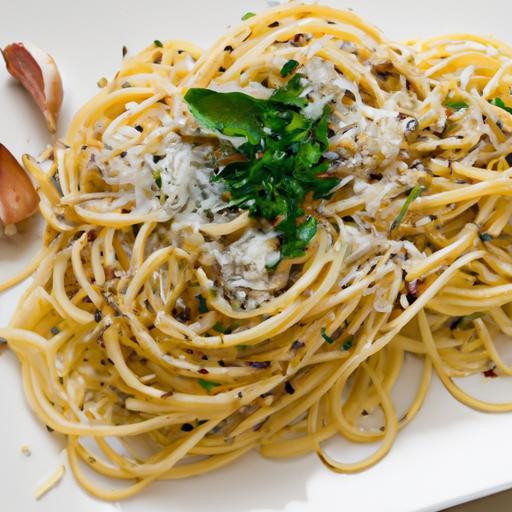
serve Spaghetti Aglio e Olio on warm white plates to highlight the gorgeous golden olive oil sheen. Garnish thoughtfully with fresh parsley and extra red pepper flakes for pops of color and spice.Pair this dish with a light Italian white wine like Verdicchio or a sparkling Prosecco for a refreshing contrast. A crisp green salad dressed with lemon and olive oil complements the richness perfectly. Don’t forget to have crusty, rustic bread nearby to soak up every last drop of that garlicky oil bliss.
| Nutrient | Per Serving (approx.) |
|---|---|
| Calories | 420 kcal |
| protein | 12 g |
| Carbohydrates | 60 g |
| Fat | 14 g |
Breaking Down the Pronunciation: Sound by Sound Guide to Mastery
Spaghetti Aglio e Olio may look intimidating at first glance, but mastering its pronunciation is simpler than you might think. The key is to break it down into familiar Italian sounds. Start with spah-GET-tee – emphasizing the second syllable softly and ensuring a crisp ending. Next, glide into AH-lyoh, where “gl” is pronounced like the “lli” in “million,” creating a soft, flowing sound, rather than a hard “g.” eh OH-lyoh wraps the phrase with the rhythm and melody unique to Italian speech. Practicing in small, repetitive chunks helps build confidence and smoothness.
Common Mistakes and How to Avoid Them for Confident Communication
- Mispronouncing “aglio” as “ag-lee-oh” instead of the smooth “AH-lyoh.” Try exaggerating the “gl” sound in practice.
- Slurring or rushing the words can muddle their clarity.speak clearly and pause slightly between each part.
- Ignoring the italian accent puts your pronunciation at risk of sounding anglicized. Listen to native speakers or use language apps for auditory reference.
Expert Tips for Practicing and Perfecting Your Spaghetti Aglio e Olio Pronunciation
- Record yourself repeating the phrase and compare it with native Italians on reliable platforms like Forvo.
- Practice with friends or culinary communities who appreciate Italian cuisine for real-time feedback.
- Integrate the pronunciation practice into your cooking session; saying it aloud as you prepare enhances muscle memory and boosts confidence.

To continue your journey mastering Italian classics, explore our featured pasta recipes and deepen your culinary repertoire.
Q&A
Mastering Spaghetti Aglio e Olio: Pronunciation Made Easy – Q&A
Q1: What exactly is “Spaghetti Aglio e olio”?
A1: At its heart, Spaghetti Aglio e Olio is Italy’s ode to simplicity – a humble pasta dish made with just spaghetti, garlic (aglio), olive oil (olio), and sometimes a sprinkle of chili flakes and parsley.It’s a quick, flavorful meal that proves you don’t need fancy ingredients to create magic in the kitchen.
Q2: Why is the pronunciation of “Aglio e Olio” tricky for so many?
A2: Italian pronunciation can feel like a delightful tongue workout.”Aglio” combines a unique “gli” sound,which doesn’t have a direct English equivalent,causing the most confusion. Many English speakers might say “ag-lee-oh” or “ag-low,” but the authentic pronunciation requires a soft, almost “lyo” sound.Q3: So, how do you properly say “Aglio e Olio”?
A3: Break it down like this: Aglio sounds like “AH-lyoh” (the “gli” is a soft “ly” sound blending smoothly), and Olio is “OH-lyoh.” When you say the full phrase, it flows as “Spah-GHEH-tee AH-lyoh eh OH-lyoh.” Try to keep it light and musical – it’s Italian, after all!
Q4: Are there any tips to nail the “gli” sound in “Aglio”?
A4: Yes! Imagine saying “million” but stop just after the “li” – your tongue should press lightly against the roof of your mouth, producing that soft ‘ly’ sound. Practicing with words like “famiglia” (family) or “figlio” (son) can definately help train your ear and mouth.
Q5: Can pronouncing the dish correctly actually enhance your cooking experience?
A5: Absolutely! Language and food are deeply intertwined – saying the name right connects you more authentically with the dish’s culture and history. Plus, it adds a dash of confidence and flair to your kitchen adventures. Mastering the pronunciation feels like unlocking a secret key to Italian culinary tradition.
Q6: How significant is it to get the pronunciation right when ordering at an Italian restaurant?
A6: While most servers will understand even if you say it imperfectly, making an effort shows respect and enthusiasm for the cuisine. It might even spark a pleasant conversation! And hey, even if you slip up, your flavorful knowledge of Aglio e Olio will shine through.
Q7: Beyond pronunciation,what’s the secret to nailing this simple dish?
A7: Quality ingredients are king here – use fresh garlic,good extra-virgin olive oil,and perfectly al dente spaghetti. Timing counts too; infuse the oil slowly with garlic so it’s fragrant but not burnt. A sprinkle of parmesan or parsley at the end adds a final personal touch.
Q8: Any fun fact about Spaghetti Aglio e Olio to impress your friends?
A8: Legend says it was the standout dish of Neapolitan laborers, crafted from whatever pantry staples they had on hand – garlic and olive oil were cheap, yet mighty. It’s a testament to how a few simple ingredients can create a culinary masterpiece.
Mastering Spaghetti Aglio e Olio isn’t just about cooking-it’s about speaking the language of flavor, culture, and tradition.So go ahead, say it right, cook it well, and savor every bite with a perfect Italian flair!
Wrapping Up
Whether you’re twirling your first forkful or perfecting your tenth, mastering the pronunciation of Spaghetti Aglio e Olio is just as satisfying as savoring the dish itself. With a sprinkle of phonetic know-how and a dash of confidence, you’ll soon be ordering, sharing, and celebrating this classic Italian favorite like a true culinary connoisseur. So next time you hear those melodic Italian words, remember: you’re not just saying a recipe-you’re speaking a delicious language.Buon appetito!