
In the vibrant tapestry of Mexican cuisine, few dishes evoke the warmth of tradition and the richness of history quite like Pozole Rojo. This hearty, crimson-hued stew is more than just a meal-it’s a celebration of culture, community, and centuries-old culinary artistry. From the ancient aztec roots to festive gatherings around the family table, Pozole Rojo unravels a story steeped in flavor and heritage. join us as we journey into the heart of this iconic Mexican dish, uncovering the secrets behind its bold taste and the traditions that keep it alive across generations.
Pozole Rojo is a culinary emblem deeply rooted in Mexican heritage, a hearty stew that melds indigenous traditions with Spanish influences to create a dish bursting with flavor and history.This vibrant red pozole invokes celebrations, family gatherings, and the warmth of communal tables across Mexico. From its ancient origins as a sacred food made from hominy to the rich, fiery broth that defines its modern form, this recipe invites you to experience not just a meal but a flavorful Mexican tradition in every spoonful.
Prep and cook Time
- Preparation: 30 minutes
- Cooking: 2 hours 15 minutes
- Total Time: 2 hours 45 minutes
Yield
Serves 6 hearty bowls
difficulty Level
Medium – perfect for home cooks eager to explore authentic Mexican flavors while working through rewarding steps
Key Ingredients That Bring Depth and Vibrancy to Pozole Rojo
- 2 lbs pork shoulder, cut into large chunks – delivers juicy, tender meat that soaks up the rich broth
- 1 large can (29 oz) hominy, drained and rinsed – the textural star of the dish, puffed kernels that provide hearty substance
- 4 dried guajillo chiles – for that smoky, mildly sweet red color and aroma
- 2 dried ancho chiles – adds depth with a mild tartness and subtle heat
- 1 white onion, quartered
- 5 garlic cloves, smashed
- 1 tsp dried oregano, preferably Mexican oregano
- 1/2 tsp cumin seeds – lightly toasted to awaken earthy notes
- Salt to taste
- Fresh garnishes: shredded cabbage, radish slices, lime wedges, chopped white onion, and fresh cilantro
- Optional: Mexican crema or thinly sliced avocado for creaminess
Step-by-Step Guide to Creating an Authentic Pozole Rojo at Home
- Prepare the chiles: Remove stems and seeds from the guajillo and ancho chiles. Toast them gently in a dry skillet over medium heat until fragrant, about 1-2 minutes, being careful not to burn.
- Rehydrate the chiles: Place toasted chiles in a bowl and cover with hot water.Let soak for 15-20 minutes until softened.
- Make the chile sauce: Drain the chiles, than transfer them to a blender along with half the onion, 3 garlic cloves, cumin seeds, and 1 cup of the chile soaking liquid. Blend until smooth for a vibrant, smoky sauce. Set aside.
- Cook the pork: In a large stockpot, place pork chunks with the remaining onion, garlic, and enough water to cover (about 10 cups). Bring to a boil, skimming off any foam. Reduce heat and simmer covered for 1.5 to 2 hours, until pork is tender and easy to shred.
- Strain pork and broth: Remove pork from broth and shred with two forks. Strain the broth through a fine sieve,discarding onion and garlic.
- Combine pork, broth, and chile sauce: Return shredded pork to the pot and add the chile sauce. Add hominy and oregano. Simmer for another 30 minutes to marry the flavors, stirring occasionally.
- season thoughtfully: taste and add salt gradually, balancing the earthiness of chiles with the natural sweetness from hominy and pork.
- Prepare garnishes: Arrange shredded cabbage, radish slices, cilantro, chopped white onion, and lime wedges on a serving platter.
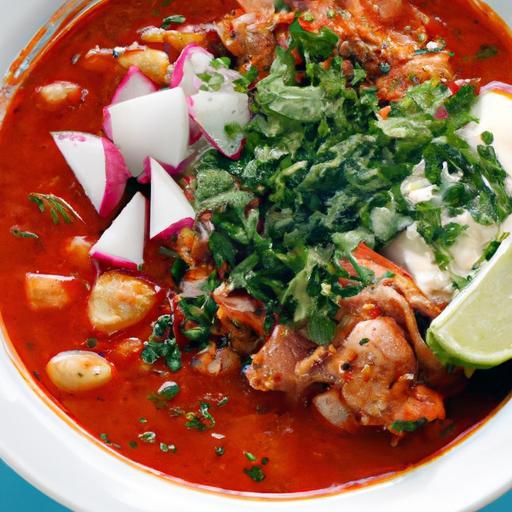
- Serve: Ladle hot pozole rojo into bowls and encourage guests to customize with garnishes for a colorful and fresh contrast to the rich stew.
Expert Tips for Perfecting Flavor and Presentation in Every Bowl
- use quality dried chiles: Authentic pozole rojo’s signature warmth and deep red hue come from well-chosen guajillo and ancho chiles-avoid pre-ground powders for a fresher taste.
- Toast spices and chiles lightly: This simple step amplifies complexity without bitterness.
- Simmer low and slow: Allow the pork to become tender and the broth to develop layers of flavor.Rushing this step can result in tougher meat and flat broth.
- Enhance the hominy: For extra depth, try rinsing canned hominy in lime-infused water (agua de limón) before adding it to the pot.
- Layer your garnishes: Radiant,crisp toppings like shredded cabbage and sharp radishes bring refreshing crunch that balances the hearty richness.
- Presentation matters: Serve in wide, shallow bowls to showcase the broth color, chunks of tender pork, and hominy, garnished vividly for that irresistible visual appeal.
- Make ahead tip: Pozole rojo tastes even better the next day. Prepare a large batch, cool, and refrigerate overnight to let flavors meld beautifully.
Serving Suggestions
For a fully immersive meal, accompany pozole rojo with warm corn tortillas or crispy tostadas. Offer side plates of sliced radishes, lime wedges, chopped onions, cilantro, and shredded cabbage so that guests can craft each bite to their liking. A drizzle of Mexican crema or a sprinkle of cotija cheese adds a creamy, salty contrast that elevates the dish. Pair with a cold mezcal or refreshing agua fresca such as horchata or jamaica for a balanced flavor journey.

| Nutrient | Per Serving |
|---|---|
| Calories | 420 kcal |
| Protein | 38 g |
| Carbohydrates | 25 g |
| Fat | 15 g |
Discover more traditional Mexican recipes to deepen your culinary repertoire on our Traditional Mexican Recipes page. For further reading on the cultural importance behind pozole, visit Mexico Desconocido, a reputable source celebrating Mexican heritage.
Q&A
Q&A: pozole rojo Unveiled: A Flavorful Mexican Tradition
Q1: What is Pozole Rojo?
A1: Pozole Rojo is a hearty and vibrant Mexican stew, known for its rich red broth, tender hominy, and succulent meat-typically pork. It’s a dish that embodies tradition, flavor, and communal celebration, often enjoyed during festive occasions and family gatherings.Q2: Where does Pozole Rojo originate from?
A2: Pozole traces its roots back to pre-Hispanic Mexico,where indigenous peoples cherished hominy as a sacred ingredient. The “rojo” or red variant emerged with the introduction of chili peppers, which gave the stew its signature fiery, deep red hue and complex flavor profile.
Q3: What gives Pozole Rojo its distinctive red color?
A3: The vibrant red color primarily comes from dried red chiles such as guajillo, ancho, or pasilla. These chilies are soaked, blended into a sauce, and simmered to create a smoky, earthy base that infuses the broth with warmth and depth.
Q4: what ingredients are essential in making Pozole Rojo?
A4: Core ingredients include hominy (processed corn kernels), pork (usually shoulder or pork shanks), dried red chilies, garlic, onion, and various spices like oregano and cumin. Fresh garnishes often include shredded cabbage, radishes, lime wedges, chopped onion, and avocado.Q5: How is Pozole Rojo traditionally prepared?
A5: Preparing Pozole Rojo is a labour of love. The pork is simmered slowly until tender, while chilies are rehydrated and blended into a rich red sauce.The sauce is then combined with the pork broth and hominy, simmering gently to marry all flavors before garnishes are added at the table.
Q6: Why is Pozole Rojo considered a cultural symbol in Mexico?
A6: Pozole isn’t just food-it’s a symbol of Mexican heritage and unity. Historically served during celebrations like Mexican Independence Day and Christmas, it connects generations through shared stories, rituals, and the comforting flavors of home.
Q7: Can Pozole Rojo be adapted for different diets?
A7: Absolutely! While pork is traditional, chicken can be a lighter substitute. For vegetarians and vegans, hearty mushrooms or jackfruit paired with vegetable broth and chile sauce make delicious alternatives, preserving the soul of the stew.
Q8: What makes Pozole Rojo stand apart from other Mexican stews?
A8: It’s the alchemy of ingredients-the nutty chew of hominy combined with rich, chili-spiced broth and tender meat-that sets Pozole Rojo apart. Its balance of heat, earthiness, and texture creates a truly immersive eating experience unique to mexican cuisine.
Q9: How is Pozole Rojo typically served?
A9: Pozole Rojo is served steaming hot in bowls piled with fresh, crunchy garnishes-cabbage, radishes, oregano, and a squeeze of lime brighten the hearty stew. It’s frequently enough enjoyed with warm corn tortillas or crispy tostadas on the side.Q10: Why shoudl food lovers explore Pozole Rojo?
A10: For its rich history, bold flavors, and cultural significance, Pozole Rojo offers a journey into Mexican culinary tradition. It’s comfort food that tells a story, invites sharing, and delights every palate with its layers of taste and tradition.Dive in, and savor the soul of Mexico in every spoonful!
To Conclude
As the final spoonful of pozole rojo warms your soul, it’s clear that this vibrant stew is much more than just a meal-it’s a rich tapestry of mexican heritage, culture, and communal spirit. From its ancient origins to the aromatic blend of chiles, hominy, and slow-cooked meats, pozole rojo invites us to savor the stories simmering beneath every bowl. Whether enjoyed during festive celebrations or quiet family dinners, this timeless dish continues to unite generations with its bold flavors and heartfelt traditions. So next time you dig into a steaming bowl of pozole rojo,remember: you’re partaking in a culinary legacy that has been lovingly crafted and cherished for centuries-truly a delicious taste of mexico’s soul.