


Nestled along the sun-kissed shores of India’s southwestern coast lies Kerala, a land where culture and cuisine intertwine in a vibrant tapestry of flavor and tradition. Among its many culinary treasures, Kerala Beef Curry stands out as a fiery, aromatic masterpiece that tells a story much deeper than spices alone. More than just a dish, it’s a savory journey through centuries of heritage, a bold reflection of the region’s unique palate, and a testament to the warm hospitality of its people. In this article, we’ll explore the rich origins, distinctive ingredients, and time-honored cooking techniques that make Kerala Beef Curry not just a meal, but a celebration of tradition served on a plate.
Savoring Kerala Beef Curry invites you on a culinary expedition to the lush backwaters and spice-scented hills of southern india. This dish is a celebration of bold flavors and centuries-old traditions, where each bite tells a story of Kerala’s rich cultural tapestry and its harmonious blend of indigenous and colonial influences. A personal favorite from my travels, the fiery notes matched with slow-cooked tender beef capture the spirit of kerala’s vibrant coastal heritage, making this curry truly unforgettable.
Prep and Cook Time
- Readiness: 20 minutes
- Cooking: 1 hour 15 minutes
- Total time: 1 hour 35 minutes
Yield
Serves 6 hearty portions
Difficulty Level
Medium – Perfect for cooks ready to explore bold spice blends with patience.
Key Ingredients That Define Its Bold Flavors
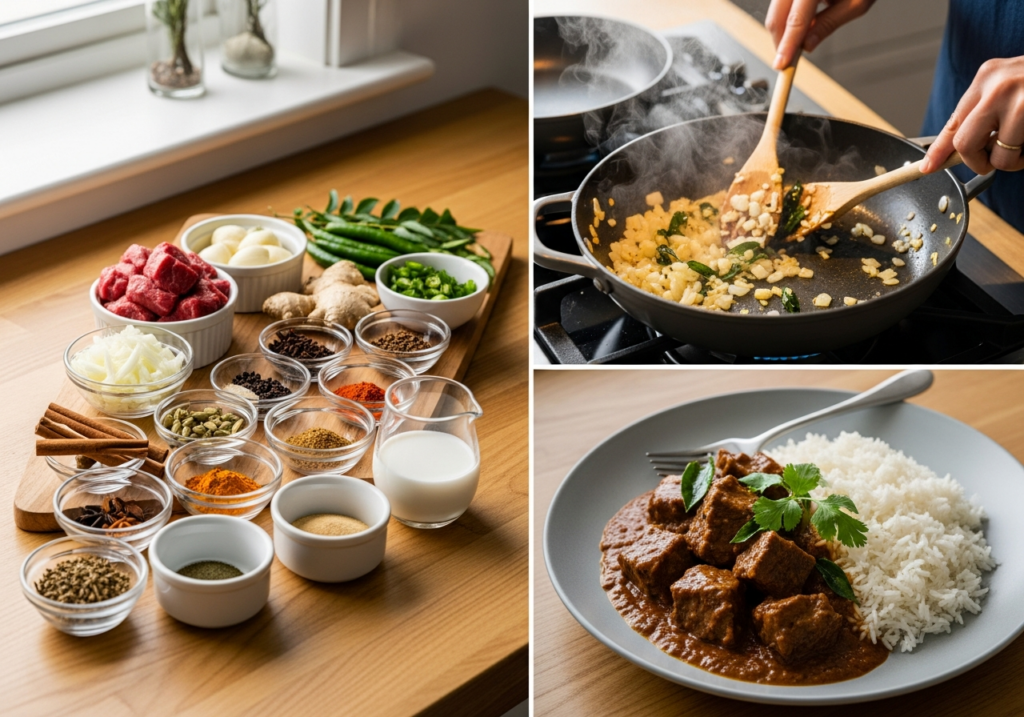
- Beef: 1.5 pounds (700 g) of boneless beef chuck or brisket, cut into 1-inch cubes – ideal for slow simmering
- Fresh spices: 2 teaspoons black peppercorns, 2 teaspoons fennel seeds, 1 teaspoon cumin seeds – toasted for maximum aroma
- Ground spices: 2 tablespoons coarsely ground red chili powder (preferably Kerala chili powder), 1 teaspoon turmeric powder
- Aromatics: 3 large onions, thinly sliced; 8 garlic cloves, minced; 2-inch piece of fresh ginger, grated
- Whole spices: 4 green cardamom pods, 4 cloves, 2-inch cinnamon stick, 2 bay leaves
- Coconut elements: 1 cup coconut milk (for creaminess and depth)
- Tamarind paste: 1 tablespoon, to add a tangy brightness
- Green chilies: 2, slit (adjust based on heat preference)
- Curry leaves: A generous handful, fresh if possible
- Mustard seeds: 1 teaspoon, for tempering
- oil: 3 tablespoons coconut oil or vegetable oil
- Salt: To taste
Step-by-Step Guide to Authentic Kerala Beef Curry Preparation
- Toast the whole spices: In a dry cast-iron skillet over medium heat, roast black peppercorns, fennel seeds, and cumin seeds just until fragrant, about 2 minutes. Let them cool, then grind coarsely using a mortar and pestle or spice grinder.
- Marinate the beef: Combine the beef cubes with 1 teaspoon turmeric, 1 teaspoon salt, half the ground chili powder, and a tablespoon of minced garlic and ginger. Let it rest for 30 minutes to absorb the spices.
- Sauté aromatics: Heat coconut oil in a heavy-bottomed pot. Add mustard seeds and wait for them to pop. Then add sliced onions, green chilies, and curry leaves.Cook on medium heat until onions turn deep golden brown, about 15 minutes, stirring frequently to avoid burning.
- Add whole spices: Stir in cardamom pods,cloves,cinnamon stick,and bay leaves. Sauté for 1 minute to release their fragrances.
- Build the curry base: Add remaining garlic and ginger. Cook until raw smell fades, about 3 minutes. Then incorporate the remaining chili powder and the freshly ground toasted spice mix. Stir to coat the onions evenly, cooking for 2 more minutes.
- Brown the beef: Add marinated beef cubes to the pot. Increase heat to medium-high and sauté until the beef is browned on all sides, about 8-10 minutes. This step locks in flavor and enhances the texture.
- Add tamarind and coconut milk: Stir in tamarind paste, followed by the coconut milk. Reduce heat to low, cover the pot, and simmer gently for 1 to 1.5 hours, stirring occasionally.Cook until the beef is tender and the sauce has thickened beautifully.
- Final seasoning and garnish: Check for salt and spice balance. Add fresh curry leaves just before turning off the heat for an aromatic touch.
Tips for Success
- Patience is key: Slow cooking ensures melt-in-the-mouth beef and fully developed flavors.
- Spice adjustments: For milder heat, reduce chili powder or omit green chilies.
- Substitutions: If tamarind is unavailable, use a squeeze of lime juice near the end of cooking for acidity.
- Make ahead: Kerala Beef Curry tastes even better the next day after spices have melded.
- choosing the cut: Opt for beef cuts with good marbling; avoid lean cuts which may become dry.
Pairing Suggestions to Enhance Your Culinary Experience
This curry dances on the tongue with its robust spice. Serve it with steaming portions of fluffy Matooke (steamed plantains) or simple coconut rice to temper the heat. For traditional authenticity, try appam (fermented rice pancakes) or parotta (layered flatbread), both perfect for soaking up the rich sauce.
To complement the meal, a crisp cucumber raita or a tangy mango pickle brings refreshing contrasts. Sip on a cool buttermilk or a mildly spiced chai to round out the sensory journey.

| Nutrient | Per Serving |
|---|---|
| Calories | 380 kcal |
| Protein | 32 g |
| Carbohydrates | 6 g |
| Fat | 24 g |
Q&A
Q&A: Savoring Kerala Beef Curry – A Spicy Journey Through Tradition
Q1: What makes Kerala Beef Curry a unique dish in Indian cuisine?
A1: Kerala Beef Curry stands apart with its bold, fiery flavors and rich coconut undertones, reflecting the coastal state’s abundant use of spices and coconut. Unlike milder beef preparations elsewhere, this curry is a celebration of intense aromas, slow-cooked to tender perfection – a true testament to Kerala’s culinary heritage where tradition meets taste in every bite.
Q2: How does the geography of Kerala influence the ingredients used in this curry?
A2: Nestled between the Arabian Sea and the Western Ghats, Kerala boasts a tropical climate ideal for growing spices like black pepper, cardamom, and cloves – all staples in the curry’s spice mix. Coconut trees flourish here, providing fresh coconut milk and oil that add creaminess and depth. This coastal bounty infuses the curry with an unmistakable regional character that’s as vibrant as Kerala itself.
Q3: What role does tradition play in the preparation of Kerala beef Curry?
A3: tradition is the heart and soul of this dish. Passed down through generations, each family has its own secret spice blend and cooking method.The process frequently enough begins with toasting spices to awaken their oils, followed by slow simmering to meld flavors deeply into the beef. This ritualistic approach preserves cultural identity and transforms simple ingredients into a soulful feast.
Q4: Can you describe the balance of flavors in Kerala Beef Curry?
A4: The curry is a harmonious dance of heat,earthiness,and slight sweetness. Fiery dried red chilies and black pepper lend a sharp kick, grounded by the warm musk of cinnamon and cloves. Coconut milk soothes the palate, while tangy tamarind or vinegar adds a subtle brightness. The result is a complex,layered flavor profile that evolves with every spoonful.
Q5: How is Kerala Beef Curry traditionally served?
A5: Traditionally, this curry is paired with steamed rice or appam, a soft, lacy rice pancake native to kerala. The mildness of these accompaniments perfectly offsets the curry’s robust spices, allowing the flavors to shine. It’s frequently enough enjoyed at family gatherings and festive occasions, where sharing the meal fosters community and connection.
Q6: what cultural meaning does Kerala Beef Curry hold?
A6: Beyond its culinary appeal, Kerala Beef Curry embodies the diversity and openness of Kerala’s society. Beef consumption is embraced by many communities here, symbolizing local customs that differ from other parts of India. The dish tells stories of trade, migration, and coexistence – a spicy narrative steeped in history and identity.
Q7: How can one recreate the authentic taste of Kerala Beef curry at home?
A7: To capture authentic flavors, begin with quality beef-preferably a cut suitable for slow cooking. Toast whole spices like peppercorns, cinnamon, and cloves before grinding for freshness. use freshly grated coconut or pure coconut milk to achieve the creamy texture. Patience is key: slow simmering melds the spices and tenderizes the meat. Lastly, balance the heat and tang with a careful hand – it’s that harmony that transforms your kitchen into a Kerala spice haven.
Q8: Are there any modern twists to this traditional recipe?
A8: Contemporary chefs often experiment by adding ingredients like roasted garlic, smoked paprika, or experimenting with pressure cooking to save time. Plant-based versions using jackfruit or mushrooms are gaining popularity, highlighting the dish’s adaptability. Yet,even with these innovations,the essence remains rooted in Kerala’s timeless spice legacy.
Embark on your own spicy journey with Kerala beef Curry – a dish where every bite carries centuries of tradition, culture, and the vibrant spirit of God’s Own Country.
In Conclusion
As the rich aroma of Kerala beef curry lingers in the air, it invites more than just the palate on a journey-it beckons the senses to embrace a legacy steeped in culture, spice, and tradition. Each bite is a vibrant chapter in the story of Kerala’s culinary heritage, where bold flavors tell tales of age-old recipes passed down through generations. Savoring this curry is more than enjoying a meal; it’s an immersive experience that honors history while celebrating the vibrant spirit of Kerala’s kitchens. So the next time you find yourself craving something extraordinary, let the spicy warmth of Kerala beef curry transport you to a land where tradition simmers in every simmering pot.